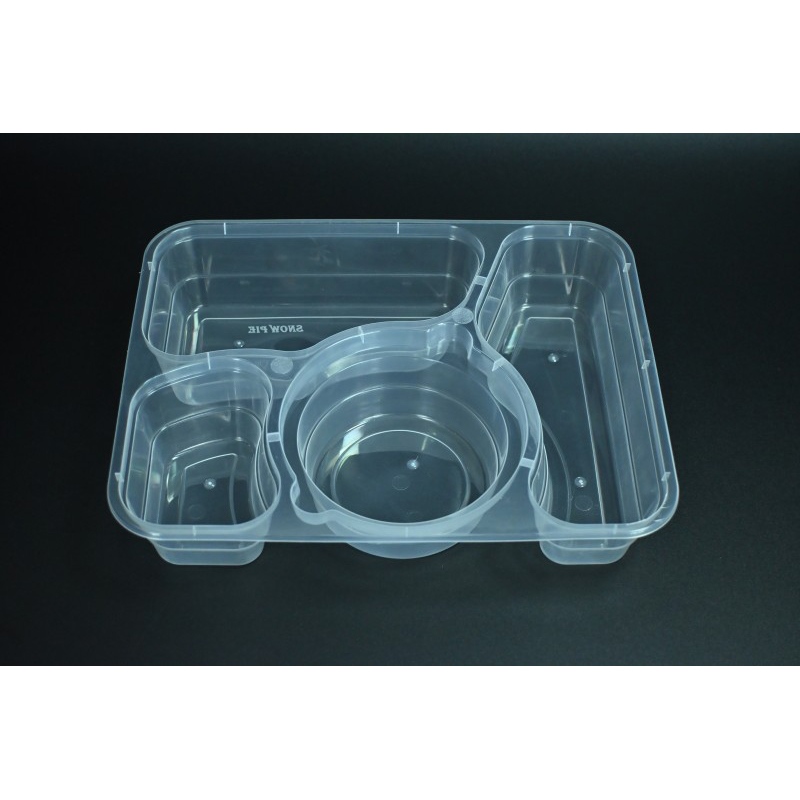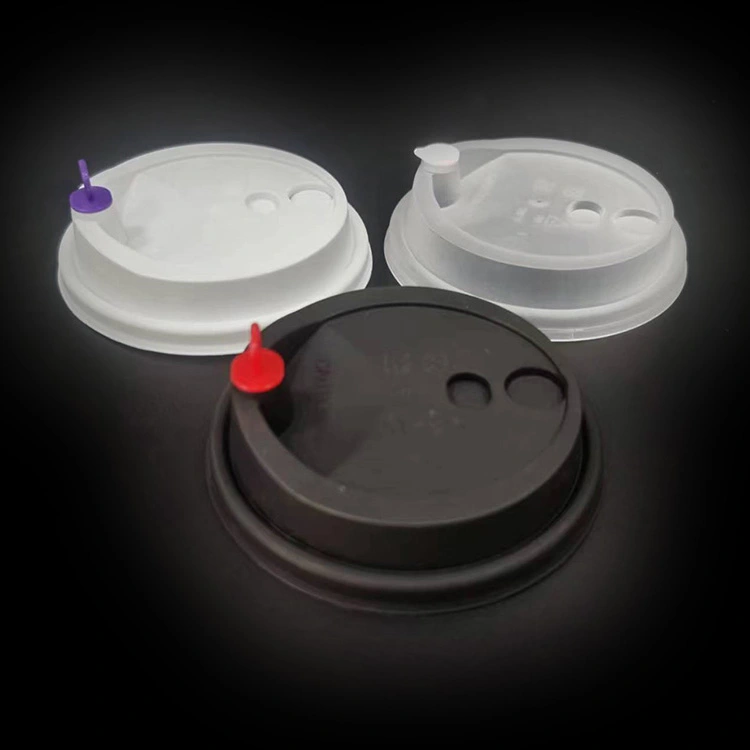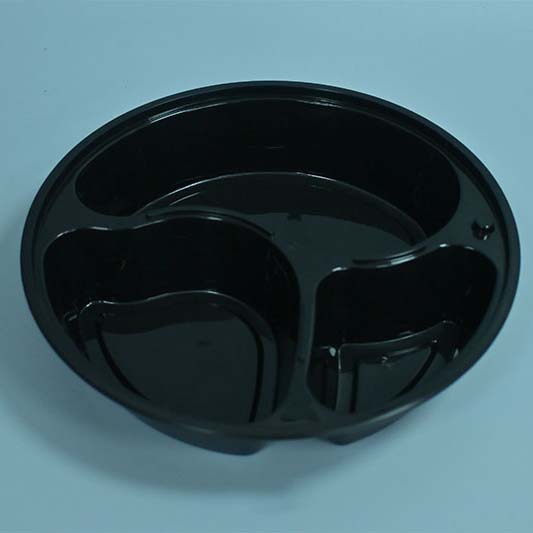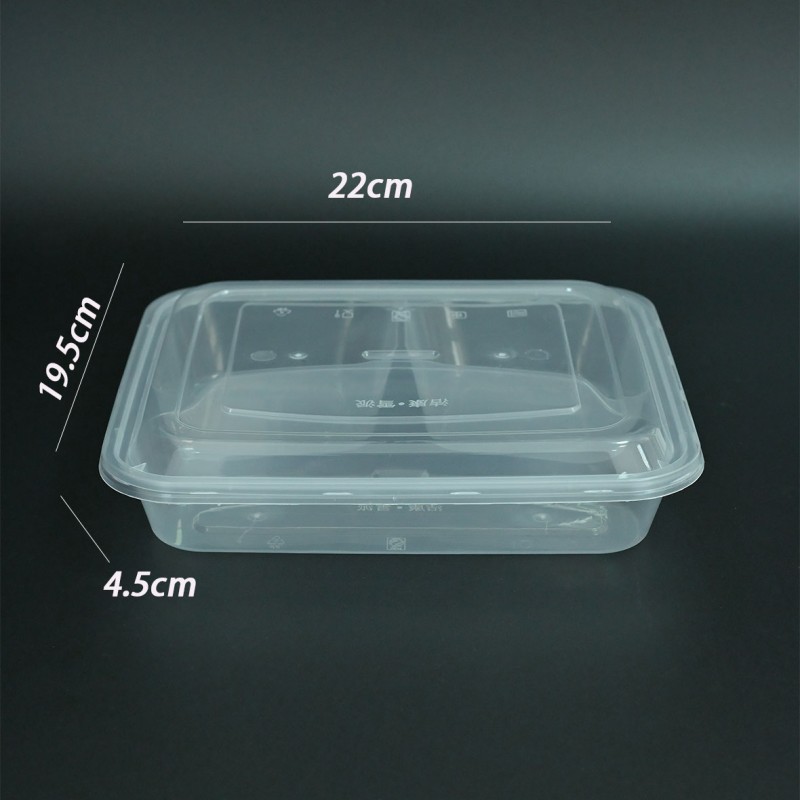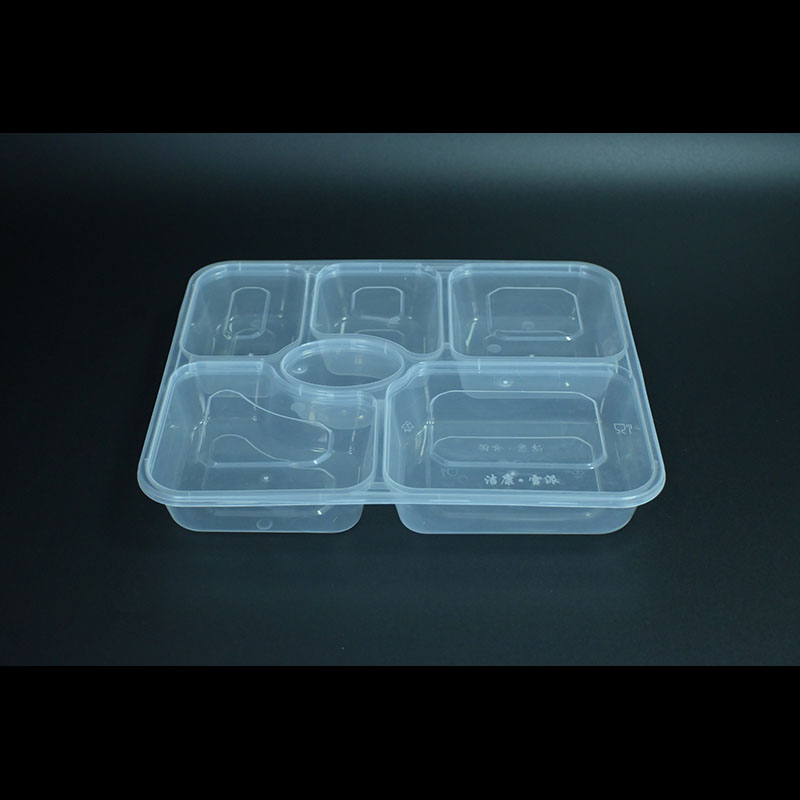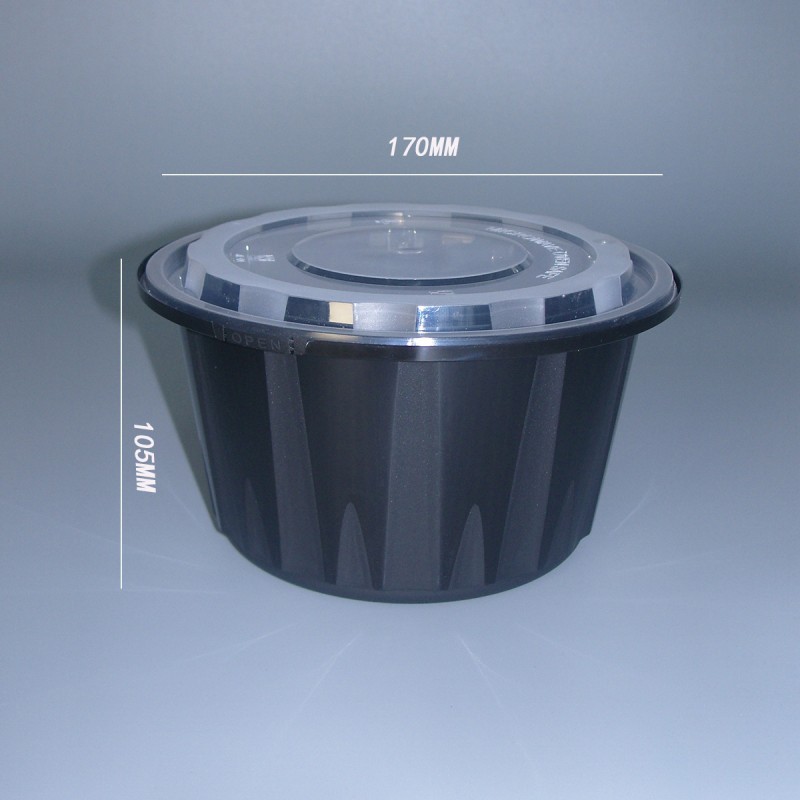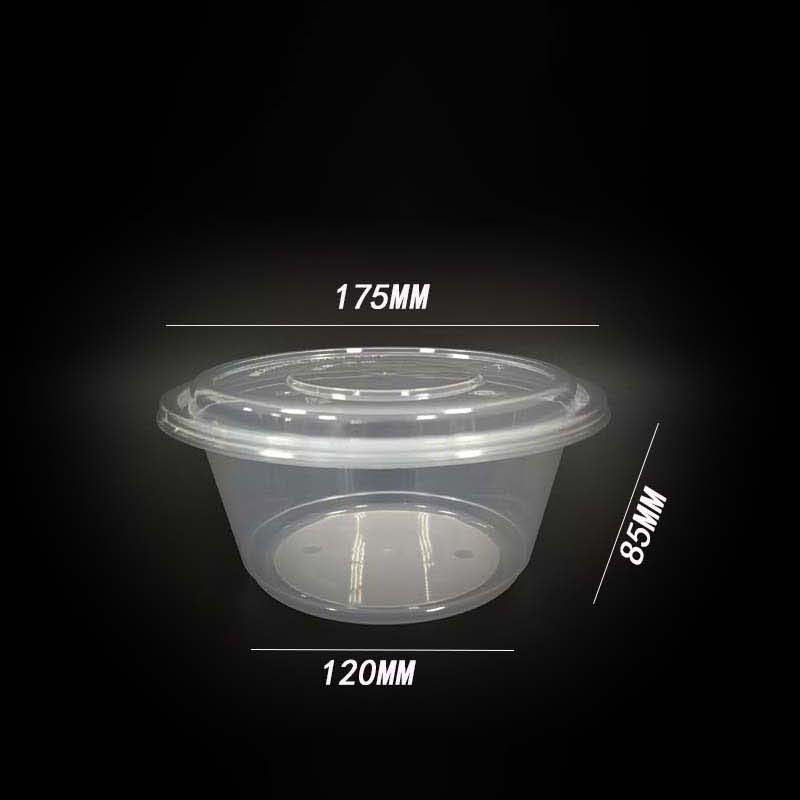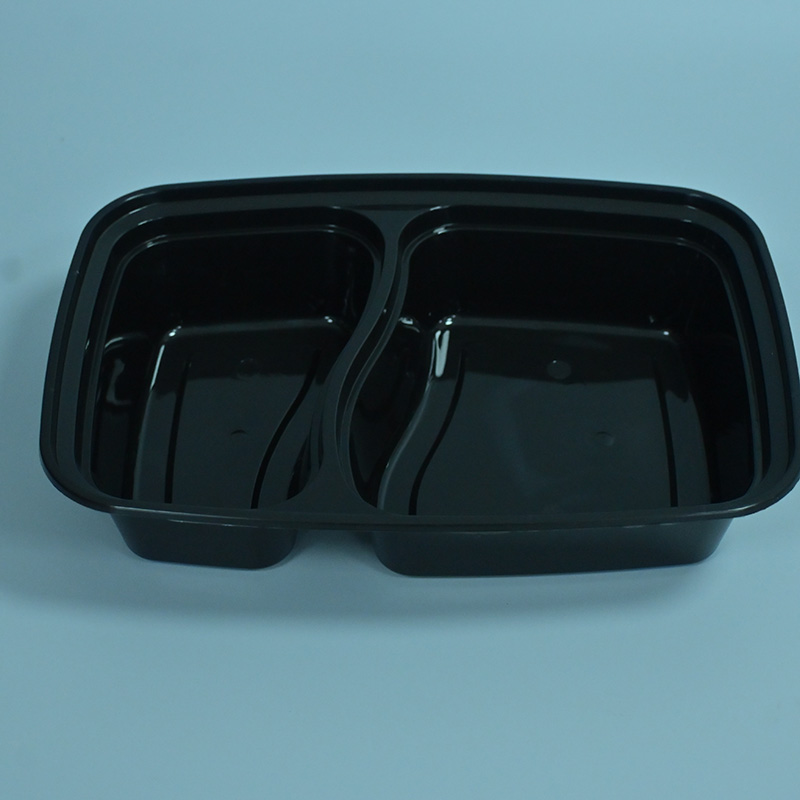

A reliable food container does more than hold prepared meals. It helps restaurants maintain food presentation, supports efficient storage, simplifies takeaway operations, and protects food during transportation. A PP square basin-style food container offers a practical packaging option for restaurants, catering businesses, food distributors, and takeaway brands. This article explores its material characteristics, structural design, everyday applications, purchasing considerations, and customization possibilities to help businesses select packaging that meets their operational requirements.
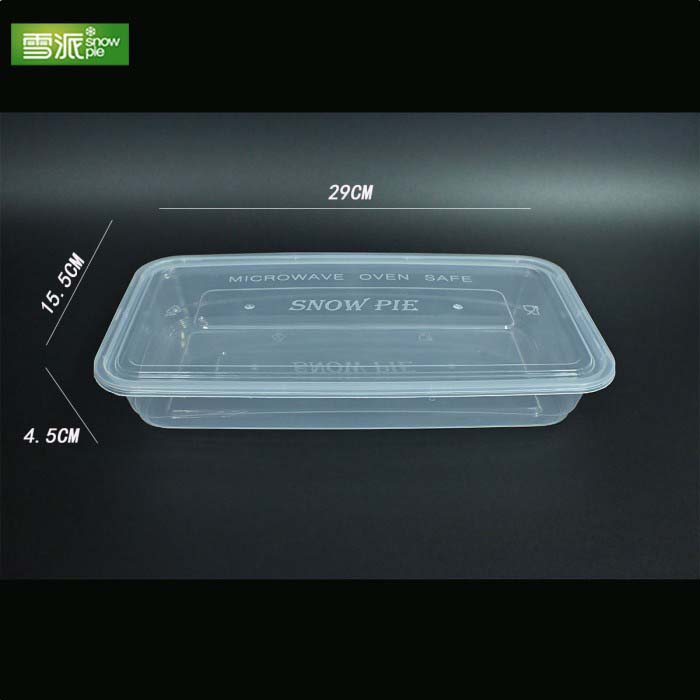
1. Understanding Modern Food Packaging Requirements
Food packaging has become an essential part of the modern foodservice industry. Restaurants, takeaway shops, catering companies, supermarkets, and prepared-meal suppliers all depend on containers that can protect food while making daily operations more efficient.
However, choosing packaging is not always straightforward. A container may look attractive but perform poorly during transportation. Another option may offer a low purchasing price but occupy too much warehouse space or prove difficult to handle during busy service periods.
These challenges become more noticeable when businesses handle large food portions, frequent takeaway orders, or bulk meal preparation. Packaging must accommodate different food textures, portion sizes, storage conditions, and delivery requirements.
A PP square basin-style food container provides a practical format for businesses looking for a combination of usable interior space, convenient handling, and organized storage. Its square-inspired shape is particularly relevant to foodservice operations where packaging efficiency and portion presentation matter.
For purchasing managers, the important question is not simply whether a container can hold food. It is whether the container can perform consistently throughout preparation, packing, storage, transportation, and customer use.
2. What Is a PP Square Basin-Style Food Container?
A PP square basin-style food container is a food packaging product made from polypropylene (PP), featuring a square or approximately square basin-shaped body. Its structure provides an open interior space for holding prepared meals, ingredients, and other suitable food products.
Unlike some traditional packaging formats with narrow or irregular interiors, the basin-style structure is designed to provide accessible storage space. Depending on the specific model, the container may feature rounded corners, reinforced edges, different capacities, and a matching lid.
Understanding Its Main Components
- Container body: The main structure that holds food and determines the usable capacity.
- Square-style shape: A practical geometry that can support organized arrangement and storage.
- Base structure: The bottom section that contributes to the container's stability when placed on a flat surface.
- Rim and edges: Important structural areas that influence handling and lid compatibility.
- Matching lid: Where available, a compatible lid helps cover the food and reduce exposure during handling and storage.
Why Does the Basin-Style Structure Matter?
Food businesses often need containers that accommodate meals without creating unnecessary packaging complexity. A basin-style design offers a straightforward interior that can hold different food combinations, depending on its dimensions and depth.
For example, a restaurant may use a larger model for prepared dishes, while a food distributor may select another capacity for portioned ingredients. This flexibility makes the format relevant to different foodservice applications.
Nevertheless, buyers should examine actual product dimensions, usable volume, wall thickness, lid compatibility, and intended food applications rather than relying on the product name alone.
3. Why Is Polypropylene a Practical Food Packaging Material?
Polypropylene is widely used in food packaging because of its useful combination of relatively low weight, moldability, and practical performance characteristics. It can be processed into different shapes and dimensions, allowing manufacturers to develop containers for various foodservice requirements.
3.1 Lightweight and Convenient to Handle
Packaging weight affects more than the container itself. It also influences the total weight of packed meals, transportation arrangements, and the convenience of handling large quantities of food orders.
PP containers are generally lightweight compared with many alternative rigid packaging materials. This characteristic makes them suitable for takeaway businesses and catering operations that handle multiple packaged meals throughout the day.
3.2 Flexible Manufacturing Possibilities
Polypropylene can be processed through established plastic manufacturing methods, including injection molding. Manufacturers can develop different container sizes, shapes, structural details, and product configurations according to market requirements.
For distributors and food packaging brands, this provides opportunities to select product specifications that better match their customers' applications.
3.3 Suitable Heat Performance When Properly Specified
One important reason businesses consider PP packaging is its potential suitability for certain hot-food applications. However, not every PP container has the same heat resistance.
Actual performance depends on resin specifications, product design, manufacturing quality, food characteristics, and exposure conditions. Buyers should request the manufacturer's verified temperature range and instructions before using a container for hot filling or microwave reheating.
3.4 Practical for Different Food Packaging Needs
PP containers can be manufactured in configurations suitable for a variety of food products, including prepared meals, rice dishes, vegetables, and other foods compatible with the specific product specifications.
For food businesses, the advantage is the ability to select a material and container design that suit the intended application instead of depending on one universal packaging solution.
4. Which Design Features Matter in Daily Foodservice Operations?
A food container's practical value depends on how well its design supports everyday handling. Small structural details can influence packing efficiency, food presentation, storage arrangements, and transportation reliability.
4.1 Usable Interior Space
The internal dimensions determine how much food can be placed inside the container. A basin-style structure can provide a convenient space for larger portions and mixed food combinations.
Buyers should consider both the advertised capacity and the actual usable dimensions. Two containers with similar nominal capacities may have different depths, opening widths, and internal shapes.
4.2 Stable Base Construction
A stable base helps a filled container remain properly positioned on preparation tables, serving counters, and other flat surfaces.
For businesses that prepare meals in advance, base stability is particularly important because containers may be filled, moved, stacked, and stored repeatedly during normal operations.
4.3 Rim Quality and Lid Compatibility
The rim is an important part of the container structure. When a matching lid is used, the dimensions and geometry of the rim influence how the lid fits.
A secure-fitting lid can help reduce accidental exposure and improve handling. However, a fitted lid should not automatically be considered leakproof. Buyers should conduct practical tests using the intended food type and transportation conditions.
4.4 Stackability and Storage Efficiency
Storage space is a recurring concern for restaurants, wholesalers, and food distribution companies. Containers that can be nested or stacked efficiently may help businesses organize inventory and reduce unnecessary storage requirements.
When assessing stackability, consider the following:
- Whether empty containers can be nested consistently.
- Whether the stack remains stable during handling.
- Whether the design allows easy separation of individual containers.
- Whether lids can be stored and organized efficiently.
- Whether packed containers maintain their shape under the intended stacking conditions.
4.5 Surface Appearance and Product Consistency
Packaging contributes to the overall presentation of prepared food. A clean surface, consistent color, uniform dimensions, and neat edges can help create a professional impression.
For businesses purchasing in bulk, production consistency is equally important. Noticeable differences between batches may create difficulties when products are used across multiple restaurant locations.
5. Where Can Square Basin-Style Food Containers Be Used?
The applications of a PP square basin-style food container depend on its size, structural strength, lid configuration, and verified material performance. Several foodservice sectors may find this packaging format useful.
5.1 Restaurants and Takeaway Businesses
Restaurants need practical packaging for prepared meals, side dishes, and takeaway orders. A square basin-style container can provide a convenient format for packaging suitable food portions.
For businesses handling high order volumes, standardized container sizes can also make portion preparation and packaging workflows easier to organize.
5.2 Catering and Group Meal Services
Catering companies frequently prepare meals for offices, schools, events, and group gatherings. Their packaging requirements often involve multiple portions, consistent presentation, and convenient distribution.
Containers with appropriate capacity can help catering teams organize food portions and prepare orders more systematically.
5.3 Supermarkets and Prepared Food Retailers
Supermarkets and prepared-food retailers need packaging that supports product display, food handling, and storage. Depending on the container configuration, PP packaging may be considered for suitable prepared foods and ingredients.
Retail buyers should also evaluate product visibility, label placement, lid compatibility, and the storage conditions required for each food category.
5.4 Food Preparation and Meal Distribution
Central kitchens and meal preparation facilities handle large quantities of ingredients and prepared dishes. Containers with consistent specifications can help standardize their packaging processes.
Before adopting a particular container, operators should verify its compatibility with refrigeration, transportation, and any reheating procedures involved in their operations.
5.5 Food Packaging Distributors and Wholesalers
Distributors need packaging products that can serve multiple customers and market segments. A practical square container format may be included in product portfolios targeting restaurants, catering companies, supermarkets, and takeaway suppliers.
Consistent supply, competitive purchasing terms, product variety, and dependable communication are important factors when developing long-term supplier relationships.
6. How Does a Square Container Compare with Other Shapes?
Container shape influences storage, food arrangement, portion presentation, and packaging efficiency. Square, rectangular, and round containers each offer different advantages.
The right choice depends on the product being packaged and the operational requirements of the buyer.
| Comparison Factor | Square Basin-Style Container | Rectangular Container | Round Container |
|---|---|---|---|
| Interior layout | Broad, balanced basin-style space | Elongated storage space | Curved interior space |
| Food arrangement | Suitable for various portion arrangements | Useful for elongated or separated portions | Convenient for foods arranged around a central area |
| Storage organization | Can support organized placement depending on dimensions | Useful for linear shelf arrangements | May leave gaps in rectangular storage areas |
| Packaging applications | Prepared meals and suitable food portions | Meal sets and elongated food items | Soups, salads, and suitable individual servings |
| Key purchasing consideration | Capacity, depth, rim, and lid fit | Length, width, and compartment layout | Diameter, depth, and lid compatibility |
It is important to understand that no shape is automatically superior in every situation. A square container may offer convenient arrangement in certain storage systems, while a round container may better suit liquid-based foods.
For buyers, the best approach is to compare real product dimensions, test the packaging with representative food portions, and assess how it fits into the existing workflow.
7. How Should Businesses Choose the Right Container?
Purchasing the right food container requires more than comparing catalog photographs and unit prices. Businesses should evaluate the complete product specification and its suitability for their actual operations.
7.1 Identify the Intended Food Application
Start by identifying what the container will hold. Different foods create different packaging requirements.
- Dry or solid foods may require sufficient capacity and structural stability.
- Oily foods require suitable material performance and practical leakage testing.
- Liquid foods require particular attention to lid fit and transportation conditions.
- Hot foods require verified temperature suitability.
- Refrigerated foods require compatibility with the intended storage environment.
7.2 Confirm Capacity and Dimensions
Do not choose a container based only on its advertised volume. Check its length, width, height, opening dimensions, and internal depth.
Where possible, conduct sample filling tests using actual food portions. This helps determine whether the container provides enough usable space without excessive unused capacity.
7.3 Check Material and Food-Contact Documentation
Food packaging buyers should request relevant material information and compliance documents from their suppliers.
Depending on the destination market, purchasing teams may need to review food-contact declarations, migration test reports, applicable standards, and supporting production records.
Requirements differ between countries and regions, so importers should confirm the applicable regulations before placing a large order.
7.4 Evaluate Structural and Transportation Performance
A container should be evaluated under conditions that reasonably reflect its intended use.
Consider practical checks such as:
- Filling the container with representative food portions.
- Checking whether the base remains stable on a flat surface.
- Evaluating whether the rim and lid fit consistently.
- Testing movement and handling during transportation.
- Checking whether stacking causes deformation under expected loads.
- Inspecting the product after storage under the intended conditions.
7.5 Compare Total Purchasing Costs
A low unit price does not always represent the lowest overall packaging cost. Buyers should also consider storage, transportation, product damage, rejected batches, and packaging labor.
For wholesale procurement, compare quotations using equivalent specifications, including material, dimensions, capacity, weight, lid configuration, packaging quantity, and delivery terms.
| Purchasing Item | Questions to Confirm |
|---|---|
| Product specifications | Are the dimensions, capacity, and weight clearly defined? |
| Material | Is the PP material suitable for the intended food application? |
| Quality control | How are product dimensions and production consistency inspected? |
| Packaging | How many units are included in each carton? |
| Customization | Are custom colors, printing, or other specifications available? |
| Supply capability | Can the manufacturer support the required order quantity and schedule? |
8. How Can Customization Improve Packaging Performance?
Different food brands have different packaging requirements. A standardized product may work well for general applications, but businesses with specific brand identities or operational needs may benefit from customized solutions.
8.1 Customized Dimensions and Capacity
Food businesses often need packaging that matches their portion sizes and product categories. Customized dimensions may help improve the relationship between food volume and container capacity.
Before requesting a custom design, buyers should provide their preferred dimensions, estimated capacity, intended food type, and expected usage conditions.
8.2 Color and Logo Printing
Packaging is also an important part of brand presentation. Custom colors and logo printing can help food businesses create a more recognizable appearance across takeaway orders and retail packaging.
When discussing customized printing, buyers should confirm available printing methods, artwork requirements, color consistency, and minimum order quantities.
8.3 Product Structure and Lid Options
Depending on manufacturing capabilities, businesses may request adjustments to container geometry, rim design, or matching lid configurations.
Any structural customization should be evaluated through samples and practical performance testing before mass production begins.
8.4 Flexible Purchasing Arrangements
Not every business needs the same purchasing volume. Smaller food brands may prefer flexible orders while established distributors may require larger and more regular shipments.
Discussing order quantities, sample availability, lead times, and production arrangements at an early stage can help both parties establish realistic purchasing expectations.
9. What Should Buyers Expect from a Reliable Manufacturer?
Selecting a suitable manufacturer is an important part of building a stable food packaging supply chain. A reliable supplier should offer more than a product quotation. It should provide clear specifications, consistent communication, and practical support throughout the purchasing process.
9.1 Manufacturing Experience and Production Capacity
Buyers should understand the supplier's manufacturing background, production equipment, and ability to handle different order quantities.
Production capability is particularly important for wholesalers and distributors who need stable inventory and repeat orders.
9.2 Quality Inspection and Product Consistency
Consistent quality helps businesses reduce packaging problems during daily operations. Ask suppliers about their inspection procedures, including dimensional checks, appearance inspection, material controls, and batch management.
Where necessary, request samples and supporting quality documents before confirming bulk production.
9.3 Customization and Communication
A manufacturer with customization capabilities can help buyers explore product specifications that better match their business requirements.
Clear communication is equally important. Product drawings, sample approvals, printing details, packaging information, and delivery schedules should be confirmed before production.
9.4 Why Consider Tianjin Jiekang Kitchenware Co., Ltd.?
Tianjin Jiekang Kitchenware Co., Ltd. was established in 2016 in Wuqing District, Tianjin, China. The company focuses on the research, design, manufacturing, and supply of disposable foodservice products and related packaging solutions.
Its product portfolio includes disposable plastic tableware, injection-molded bowls, eco-friendly lunch boxes, PP injection-molded lunch boxes, vacuum-sealed lunch boxes, lockable containers, milk tea cups, and other foodservice supplies.
With more than 30 injection molding machines and supporting automated production lines, the company has developed manufacturing capabilities for different food packaging categories.
For customers with specific purchasing requirements, Tianjin Jiekang Kitchenware Co., Ltd. supports customized product specifications and color logo printing. Its customization services can cover different stages, from product design to finished product delivery, subject to project requirements.
For food packaging distributors, wholesalers, and foodservice brands, working with a manufacturer that offers multiple product categories and customization options can simplify supplier communication and product sourcing.
When evaluating a PP square basin-style food container, buyers are encouraged to discuss the exact model, available dimensions, material specifications, lid options, sample arrangements, and applicable food-contact documentation with the manufacturer.
10. Frequently Asked Questions
Q1: What is a PP square basin-style food container mainly used for?
A PP square basin-style food container is designed for holding and packaging suitable food products. Depending on its capacity and specifications, it can be used in restaurants, takeaway services, catering operations, supermarkets, and food distribution businesses.
Q2: Is a PP square basin-style food container suitable for hot food?
Some PP containers are suitable for specified hot-food applications. However, heat resistance varies according to the material grade and product construction. Buyers should confirm the manufacturer's tested temperature range before using a particular model with hot food.
Q3: Can PP square food containers be used in microwave ovens?
Only models specifically identified as microwave-safe should be used for microwave reheating. Always follow the manufacturer's instructions regarding temperature, heating duration, lid removal, and food compatibility.
Q4: Are PP square basin-style containers suitable for liquid foods?
Suitability depends on the container structure and lid design. Buyers should conduct leakage tests using the actual food or liquid and simulate the expected transportation conditions before selecting a product for liquid-based applications.
Q5: Can these containers be customized with a company logo?
Customization may include product colors, logo printing, and selected structural specifications, depending on the manufacturer's production capabilities. Buyers should provide their artwork and required product details for evaluation.
Q6: What information should buyers provide when requesting a quotation?
It is helpful to provide the required container dimensions, capacity, material requirements, estimated order quantity, lid preferences, customization requirements, and delivery destination. This allows manufacturers to prepare a more accurate quotation.
Q7: How can buyers evaluate the quality of a PP food container?
Buyers should inspect material information, dimensions, weight consistency, surface appearance, rim quality, lid compatibility, and structural performance. Sample testing and relevant food-contact documentation are also important before bulk purchasing.
Q8: What is the difference between a PP container and a PET food container?
PP and PET are different plastic materials with different performance characteristics. PP is often considered for applications requiring specific heat performance, while PET is commonly selected when product visibility and clarity are priorities. The appropriate material depends on the intended food, temperature conditions, packaging design, and applicable regulations.
Q9: Can food packaging manufacturers supply wholesale orders?
Many food packaging manufacturers support bulk purchasing for wholesalers, distributors, and commercial foodservice customers. Buyers should confirm minimum order quantities, production capacity, packaging details, lead times, and shipping arrangements before placing an order.
Q10: Why should businesses request product samples before bulk purchasing?
Samples allow buyers to check actual dimensions, food capacity, appearance, lid fit, handling convenience, and suitability for their packaging workflow. They also provide an opportunity to confirm specifications before committing to a larger production order.
11. Final Thoughts: Choosing Packaging That Supports Your Business
Choosing the right food container is an important decision for restaurants, catering companies, supermarkets, and food packaging distributors. The ideal solution should match the food application while supporting convenient handling, efficient storage, consistent presentation, and dependable transportation.
A PP square basin-style food container offers a practical packaging format for businesses that need an accessible interior space and a versatile container structure. However, the final purchasing decision should always be based on actual product specifications, food-contact compliance, performance testing, and total operating requirements.
Working with an experienced manufacturer can also make product selection and customization more straightforward. From standard food containers to customized packaging solutions, clear specifications and effective communication help buyers develop a more reliable supply arrangement.
Looking for a Reliable Food Container Manufacturer?
Whether you are a food packaging wholesaler, restaurant supplier, catering company, or private-label brand, Tianjin Jiekang Kitchenware Co., Ltd. is ready to discuss your food packaging requirements. Contact our team to learn more about available PP food containers, customized specifications, logo printing, and wholesale purchasing solutions.
Share your product requirements and let us help you find a suitable packaging solution for your business.