
Choosing the right food packaging is about much more than holding a meal. Restaurants, takeaway businesses, catering companies, food manufacturers, and packaging distributors need containers that protect food quality, simplify daily operations, and provide a reliable experience for customers. A PP round food container offers a practical option for packaging soups, rice dishes, salads, sauces, prepared meals, and many other food products.
However, not every container meets the same requirements. Capacity, lid fit, material quality, temperature resistance, transportation conditions, and unit cost can all influence purchasing decisions. Understanding these factors helps businesses select packaging that meets their operational needs while avoiding unnecessary expenses.
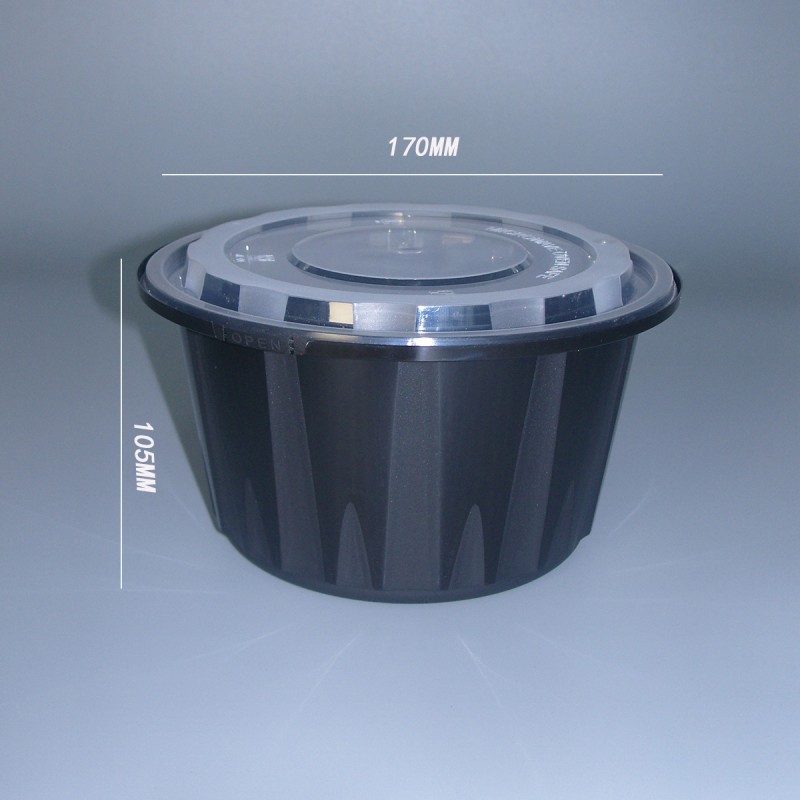
This guide explains what a PP round food container is, its main advantages, common applications, material and safety considerations, and the differences between round and rectangular packaging. It also provides practical purchasing advice for wholesale buyers and food service businesses looking for dependable packaging solutions.
1. What Is a PP Round Food Container?
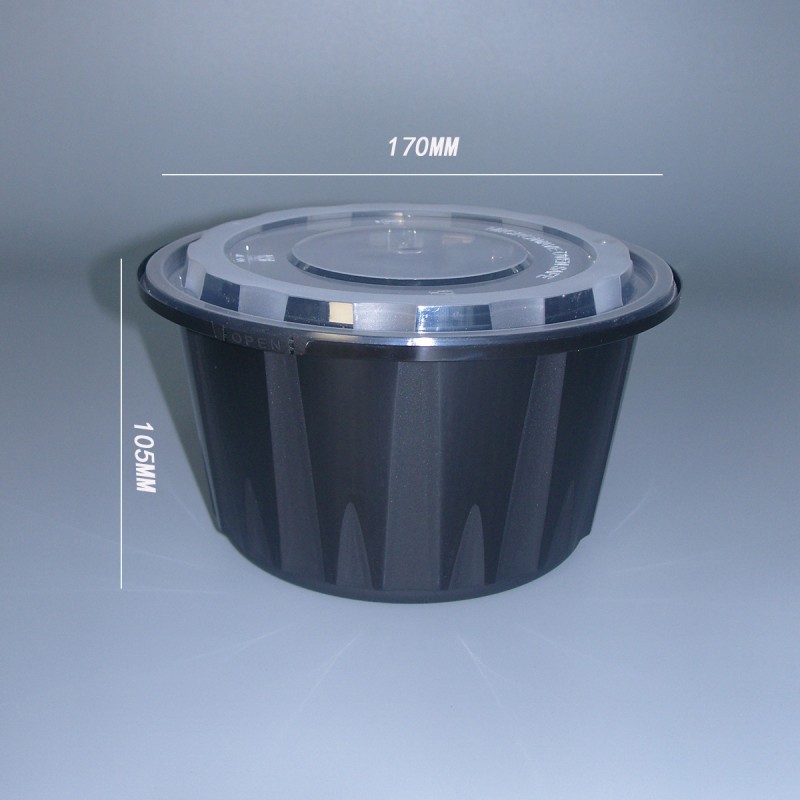
A PP round food container is a food packaging product made from polypropylene, a thermoplastic polymer commonly used in food storage and food service applications. The abbreviation PP refers to polypropylene, which is often identified by recycling code 5.
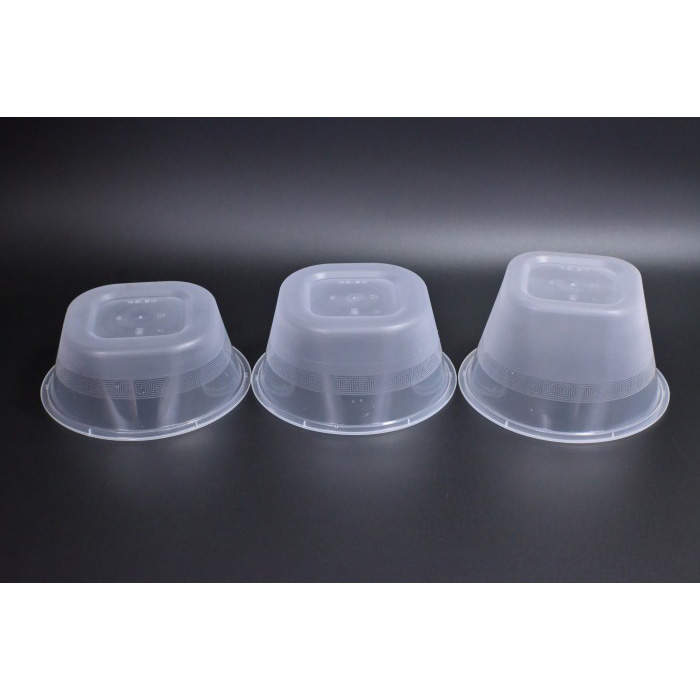
These containers generally feature a circular base and a compatible lid. Depending on the product design, they may be manufactured in different capacities, wall thicknesses, colors, and lid styles to accommodate various food packaging requirements.
Understanding the Main Components
- Container base: Holds the food and provides structural support during filling, storage, and handling.
- Fitted lid: Helps protect the contents from external contamination and reduces the risk of spills when properly matched to the base.
- Rim and closure: Determine how the lid attaches and how reliably the package remains closed during transportation.
- Container wall: Influences rigidity, weight, material consumption, and resistance to deformation.
Round PP containers are available in multiple configurations, from small portion containers to larger takeaway and food storage formats. Some are designed for chilled products, while others may be suitable for hot food or microwave reheating when the complete product has been tested and labeled for those conditions.
For buyers, the important point is that the material name alone does not define the performance of the finished container. Its design, manufacturing quality, lid material, and intended use must all be considered.
2. Why Do Businesses Choose PP Round Food Containers?
Food businesses often need packaging that balances usability, product protection, and purchasing costs. Polypropylene offers several useful characteristics that make it suitable for a wide range of food packaging applications.
2.1 Practical Heat Resistance
Polypropylene is widely used in food containers designed for hot-fill or microwave applications. Its suitability depends on the specific resin, container construction, food composition, exposure time, and temperature conditions.
For restaurants selling reheatable meals, selecting a container specifically rated for microwave use can simplify the customer experience. Buyers should verify the instructions for the exact container and lid rather than assuming every PP product is microwave-safe.
2.2 Lightweight and Easy to Handle
Lightweight packaging can help streamline portioning, packing, storage, and delivery operations. Round PP containers are easy to handle in busy kitchens, while their relatively low weight can contribute to efficient packaging and transport when compared with heavier alternatives.
For high-volume businesses, the combined effect of container weight, carton dimensions, and packing efficiency can influence total logistics costs.
2.3 Versatile Food Packaging
A PP round food container can accommodate a variety of products, including soups, rice, noodles, side dishes, sauces, and chilled prepared foods. A suitable range of sizes allows businesses to standardize packaging across different menu items without relying on a single oversized container.
2.4 Convenient Lid Compatibility
A properly fitted lid helps keep food contained and protects it during handling. This is particularly important for delivery services, takeaway counters, catering operations, and meal preparation businesses.
However, a snap-on lid should not automatically be treated as leakproof or airtight. Buyers handling liquids should assess the actual closure design and test the container under realistic transportation conditions.
2.5 Cost Control for Daily Operations
PP packaging can be an economical choice for businesses that require consistent quantities of containers. The final value depends on more than the unit price: lid costs, shipping, carton quantities, product defects, storage requirements, and food loss caused by packaging failures can all affect the overall cost.
3. Which Foods Can These Containers Hold?
The versatility of a PP round food container makes it suitable for numerous commercial food applications, provided the selected product matches the food type and storage conditions.
3.1 Takeaway Meals and Restaurant Orders
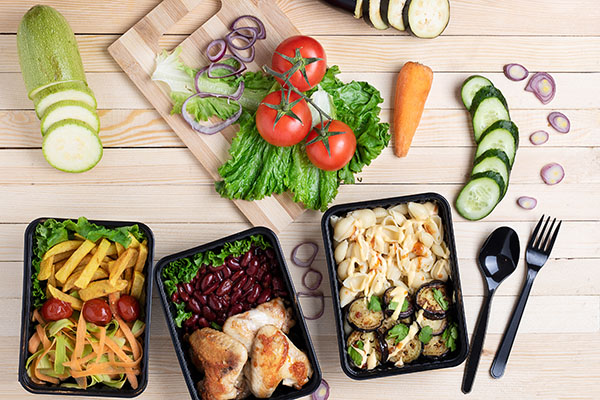
Restaurants can use round containers for rice bowls, noodles, cooked vegetables, side dishes, and individual meal portions. Their compact shape makes them convenient for portioning and serving, particularly when a menu contains foods that do not require separate compartments.
3.2 Soups, Broths, and Sauces
Round containers are a practical option for liquid or semi-liquid foods because they do not have corners where residue may collect during filling or serving. For soups and broths, a secure, compatible lid is especially important.
Before selecting a container for liquids, evaluate its closure performance, wall strength, filling temperature, and resistance to tipping during delivery. Not every standard lid is suitable for transporting hot liquids over long distances.
3.3 Meal Preparation and Food Storage
Meal preparation companies can use appropriately specified PP containers for portion-controlled meals and prepared ingredients. Different capacities can support portion planning, inventory management, and consistent presentation.
3.4 Catering and Food Distribution
Catering companies, institutional kitchens, and food distributors may require packaging that can be filled efficiently and transported in bulk. Consistent dimensions and reliable lid fit help reduce handling problems and make packing procedures easier to standardize.
3.5 Chilled Foods and Retail Portions
Suitable containers may also be used for chilled salads, desserts, fruit portions, and ready-to-eat foods. For products where appearance matters, buyers should confirm the container's transparency, surface finish, and resistance to scratching or clouding.
Important: Food compatibility, storage duration, temperature limits, and microwave suitability must be confirmed for the specific product. A container intended for chilled food should not be assumed suitable for hot filling or reheating.
4. How Does Round Packaging Compare with Rectangular Containers?
Choosing between round and rectangular food packaging depends on the menu, filling process, storage arrangement, and delivery requirements. Neither shape is ideal for every business.
| Comparison Factor | PP Round Food Container | Rectangular Food Container |
|---|---|---|
| Typical food applications | Soups, sauces, rice, noodles, salads, and portions | Meal sets, sandwiches, side-by-side dishes, and flat portions |
| Shape and access | Curved interior with no corners | Flat sides and corners can suit structured portions |
| Storage efficiency | May leave gaps between units in square cartons | Often easier to arrange in rows and rectangular shipping cartons |
| Portion presentation | Suitable for individual servings and rounded food portions | Useful for meals requiring a wider, organized layout |
| Lid design | Typically circular and matched to the rim | Typically rectangular and matched to the base |
| Selection priority | Food shape, liquid handling, and serving convenience | Compartment layout, shelf arrangement, and packing density |
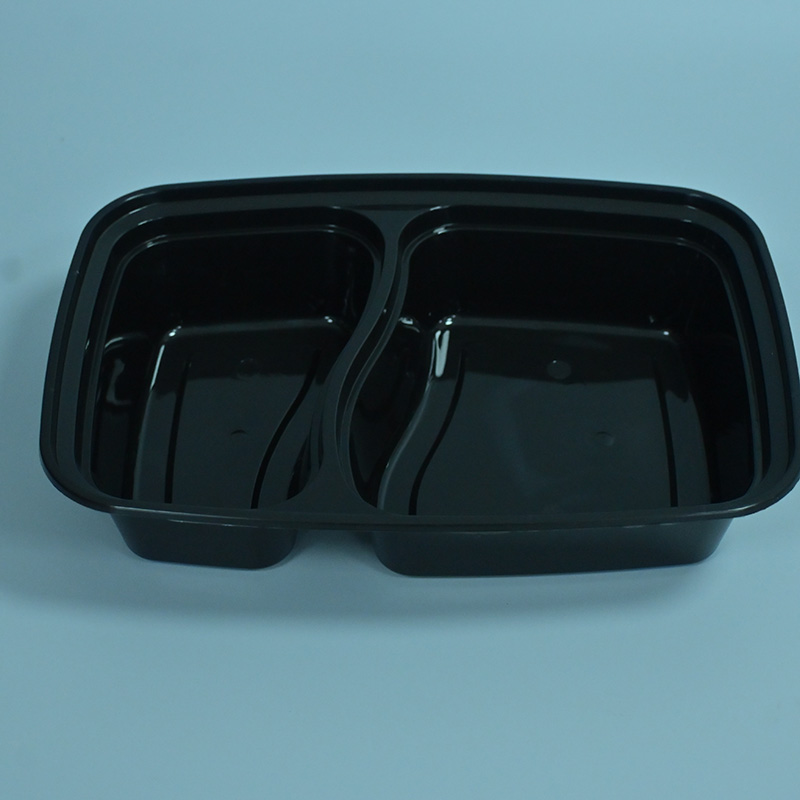
For soup shops and businesses selling individual portions, a PP round food container may provide a convenient format. For meal combinations that need a defined layout or efficient arrangement in delivery bags, rectangular packaging may be more suitable.
The best decision comes from testing the actual food portion and considering how the package moves through the entire operation, from filling and storage to delivery and consumption.
5. How Can You Choose the Right PP Round Food Container?
A container that looks suitable in a product catalogue may perform differently in a real kitchen. Buyers should define their application before requesting quotations or placing bulk orders.
5.1 Determine the Required Capacity
Capacity should match the actual portion rather than the food's weight alone. Foods with different densities occupy different volumes, and ingredients may settle or expand during filling and transport.
Measure the typical serving volume and leave adequate headspace where necessary. For soups and sauces, excessive filling can increase the risk of spills when the lid is closed or the package is tilted.
5.2 Confirm the Material and Temperature Range
Ask the supplier to confirm the exact resin and intended use conditions. If your operation involves hot filling, refrigerated storage, freezing, or microwave reheating, communicate those requirements before selecting a product.
Temperature performance should be based on the finished container's specifications and appropriate testing, not a generic temperature figure for polypropylene resin.
5.3 Check the Lid Fit and Closure Performance
A lid that is difficult to attach can slow down packing, while a poorly fitted lid may detach during delivery. Check whether the base and lid are designed to work together.
- Inspect the rim and closure for consistent fit.
- Check whether staff can close the container quickly and securely.
- Test for leakage using the actual food or an appropriate test liquid.
- Evaluate performance after normal handling, stacking, and transportation.
5.4 Evaluate Wall Thickness and Structural Strength
Thin walls may reduce material consumption but can also affect rigidity and handling. Heavier containers are not automatically better if a lighter design can meet the same performance requirements.
Ask for samples and evaluate the container when empty, filled, stacked, and carried. For hot or heavy foods, check whether the base remains stable when lifted.
5.5 Consider Transparency, Color, and Branding
Clear packaging can make food visible, while colored or opaque containers may support a particular brand presentation. If customized colors, printed packaging, or branded labels are required, confirm the available options, minimum order quantities, lead times, and applicable food-contact requirements.
5.6 Verify Carton Size and Shipping Requirements
For wholesale buyers, the packaging carton is part of the product decision. Compare the number of units per carton, gross weight, carton dimensions, stacking requirements, and shipping volume.
A low unit price may not represent the best overall deal if the product takes up more warehouse or container space. Request packing details before comparing supplier quotations.
6. What Should Buyers Know About Food Safety?
Food-contact suitability is an essential purchasing consideration for any business using plastic food packaging. A reliable selection process should combine material information, supporting documentation, and application-specific testing.
6.1 Food-Contact Compliance
Confirm that the container is intended for the food types and conditions in which it will be used. Depending on the destination market, buyers may need documentation demonstrating compliance with applicable food-contact requirements.
Ask for the relevant declarations, test reports, or technical documentation for the exact product. Check that the documents cover the actual resin, color, additives, and intended conditions of use rather than a different product in the same catalogue.
6.2 Microwave Use Requires Product-Specific Confirmation
Polypropylene is commonly used in microwaveable food containers, but the material designation alone does not establish that every finished container is suitable for microwave heating.
Before marketing a container as microwave-safe, confirm the manufacturer's instructions for the exact model, including the base and lid. Follow the specified heating duration, temperature limits, and lid-removal or venting instructions.
6.3 Match Packaging to the Food
Food composition can affect packaging performance. Hot oils, high-fat dishes, acidic ingredients, and prolonged contact may require particular attention when assessing material compatibility and temperature limits.
For products with demanding conditions, ask the supplier whether the container has been evaluated for the intended application. Do not rely on visual appearance as proof of food-contact safety.
6.4 Store and Handle Containers Properly
Keep unused food containers in clean, dry storage away from dust, chemicals, direct heat, and other potential sources of contamination. Follow the supplier's handling instructions and inspect cartons for damage before use.
Unless a container is specifically designed and labeled for repeated use, it should not automatically be treated as reusable. Follow the manufacturer's guidance for cleaning, reheating, and disposal.
7. How Can Wholesale Buyers Reduce Packaging Costs?
For restaurants, distributors, and food manufacturers, packaging expenses can become significant when thousands of units are consumed every week. A structured purchasing process helps control costs without sacrificing product performance.
7.1 Compare Total Delivered Cost
Look beyond the quoted unit price. A useful comparison should include the container, lid, printing or customization charges, freight, import-related expenses where applicable, and the cost of handling or storing the goods.
7.2 Match Order Quantities to Real Demand
Bulk orders may reduce the unit price, but excessive inventory ties up cash and warehouse space. Estimate consumption using historical orders, seasonal changes, and expected menu demand.
For new packaging projects, consider a sample evaluation or a smaller initial order where commercially available before committing to large quantities.
7.3 Reduce Packaging Failures
A container that leaks or deforms can lead to food waste, replacement orders, customer complaints, and extra labor. Evaluate actual packaging performance before choosing the lowest-priced option.
Standardizing a suitable range of sizes can also simplify inventory management and reduce the number of different lids and containers your team must keep in stock.
7.4 Plan for Consistent Supply
Ask suppliers about production lead times, minimum order quantities, quality inspection procedures, packaging specifications, and arrangements for handling defects. These details matter when packaging is essential to daily business operations.
For overseas buyers, confirm export packing, shipping methods, documentation, and communication arrangements before finalizing a purchase order.
8. How Can You Evaluate a Food Container Supplier?
A dependable supplier should be able to explain product specifications clearly and help buyers match packaging to their applications. Price matters, but communication, documentation, consistency, and order fulfillment are equally important.
Questions to Ask Before Ordering
- What is the exact material used for the container base and lid?
- What capacities, dimensions, and lid styles are available?
- Which food-contact documents and test reports can be provided?
- Is the specific product suitable for the intended filling and storage temperatures?
- Has microwave suitability been confirmed for the complete product, if required?
- What are the minimum order quantity, sample policy, and production lead time?
- Are customized colors, dimensions, or branding options available?
- How are products inspected, packed, and protected during shipping?
- What is the process for reporting and resolving quality issues?
These questions help establish whether a product is suitable for the buyer's actual requirements. Samples should be checked under realistic conditions, and the agreed specifications should be documented before mass production.
Working with Tianjin Jiekang Kitchenware Co., Ltd.
For businesses sourcing food containers, Tianjin Jiekang Kitchenware Co., Ltd. is a company to contact when exploring packaging requirements. Buyers can prepare their target capacity, intended food applications, preferred lid design, order volume, and destination market before making an inquiry.
Providing these details at the beginning makes it easier to discuss product suitability, available specifications, sample evaluation, and purchasing arrangements. Any required customization, certification, or performance claim should be confirmed directly with the supplier before an order is placed.
9. Frequently Asked Questions
Q1. What does PP mean in a PP round food container?
PP stands for polypropylene, a thermoplastic polymer commonly used in food packaging. The material is valued for its low weight and useful heat and chemical resistance. The finished container must still meet the requirements of its intended application.
Q2. Can a PP round food container be used in a microwave?
Some PP round food containers are designed for microwave reheating, but not all products are suitable. Check the manufacturer's instructions for the exact container and lid, and follow the stated heating limits and ventilation requirements.
Q3. Are PP round food containers suitable for hot soup?
They can be suitable when the container is specifically rated for the soup's filling and holding temperatures. Buyers should also test lid security and leakage performance during handling and delivery.
Q4. Are PP round food containers leakproof?
Leak resistance depends on the base design, lid fit, closure structure, and handling conditions. A standard snap-on lid does not guarantee a leakproof seal. Test the complete package with the intended food before using it for liquid delivery.
Q5. Are PP round food containers suitable for frozen food?
Some PP containers are suitable for chilled or frozen applications, while others may become less impact-resistant at low temperatures. Confirm the manufacturer's specified temperature range and test the product under your actual storage and handling conditions.
Q6. What sizes are available for PP round food containers?
Available capacities vary by manufacturer and product series. When requesting a quotation, specify the required volume, approximate food portion, container dimensions, and lid style rather than relying on capacity alone.
Q7. What should importers check before placing a bulk order?
Importers should review product specifications, food-contact documentation, sample performance, minimum order quantities, carton dimensions, lead times, shipping arrangements, and the supplier's quality control process.
Q8. Can PP round food containers be customized?
Customization options depend on the manufacturer's capabilities and product range. Ask about available sizes, colors, printing or labeling, tooling requirements, minimum quantities, and lead times. Confirm all customization details before approving production.
Q9. How can I find a reliable PP round food container supplier?
Look for clear specifications, relevant food-contact documentation, consistent samples, transparent quotation terms, and responsive communication. Evaluate the supplier's ability to meet your application requirements and delivery schedule before committing to a large order.
Q10. What information should I provide when requesting a quotation?
Include your target capacity, food type, required temperature range, lid preference, estimated quantity, customization needs, destination country, and any required compliance documents. These details help the supplier assess your needs more accurately.
Find the Right PP Round Food Container for Your Business
The right food packaging should protect your products, support efficient daily operations, and meet your customers' expectations. From takeaway meals and soups to portion-controlled food storage, choosing the appropriate PP round food container starts with clear specifications and a reliable supply plan.
Tianjin Jiekang Kitchenware Co., Ltd. welcomes inquiries from businesses exploring food container options. Share your application, capacity requirements, estimated order quantity, and customization preferences to discuss a suitable solution for your purchasing needs.
Ready to explore your packaging options? Contact us to discuss your requirements and request further product information.