Follow us for the latest company news, new product launches, and industry exhibition updates.
Choosing the right food container affects far more than food presentation. For restaurants, meal-prep companies, caterers, takeout businesses, supermarkets, and food distributors, a container must balance food protection, storage efficiency, heating convenience, transport reliability, appearance, and purchasing cost. An American-style PP square food container is designed around these practical requirements, combining a spacious square structure with polypropylene performance. This guide explains the key design features, application advantages, purchasing considerations, and customization possibilities that matter when selecting containers for professional foodservice operations.
Food packaging is no longer simply a protective layer around a meal. In professional foodservice, the container influences preparation efficiency, portion control, storage organization, delivery quality, customer experience, and even brand presentation.
A restaurant may need to prepare hundreds of meals in advance. A meal-prep company may need to freeze, transport, and reheat prepared food. A catering business may require containers that remain stable when stacked. A supermarket may need packaging that presents food clearly while making efficient use of refrigerated display space.
These businesses therefore need containers that solve several problems at the same time:
This is why container geometry and material selection deserve as much attention as capacity and price. A well-designed container can reduce operational friction throughout the food preparation and delivery process.
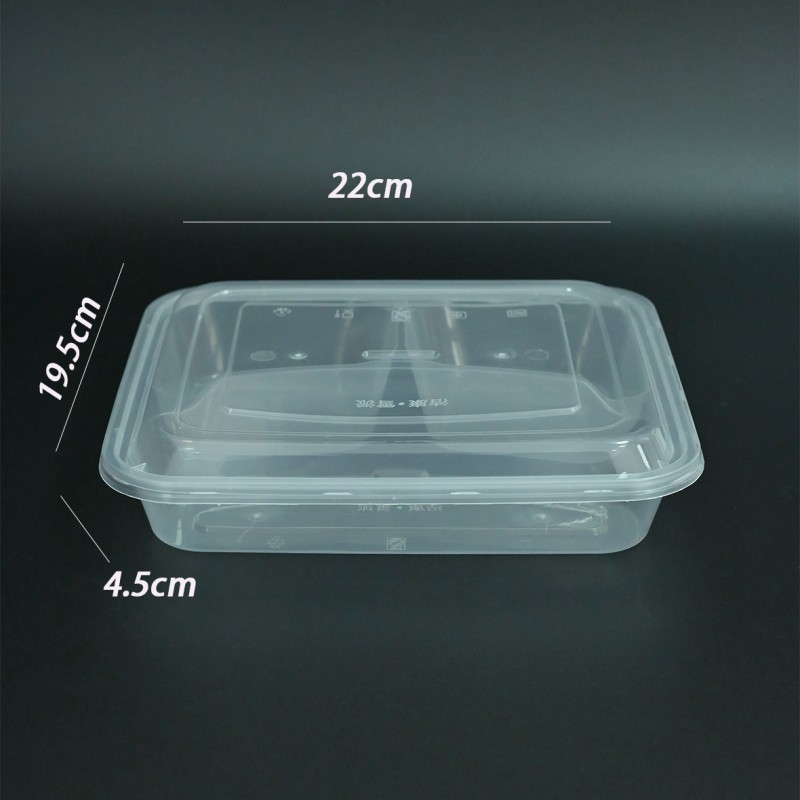
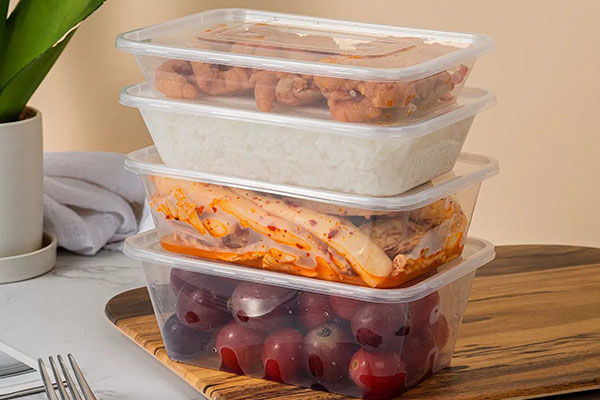
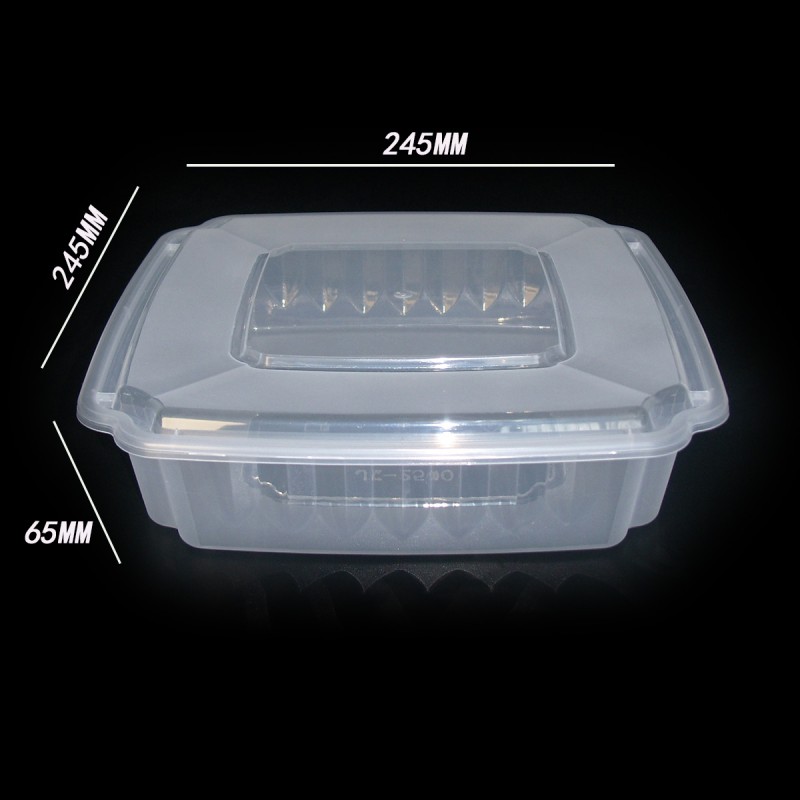
An American-style PP square food container is a food storage or takeaway container manufactured primarily from polypropylene (PP) and designed with a practical square or rectangular footprint. The term “American-style” generally refers to a spacious, functional design commonly associated with takeaway meals, meal preparation, catering, food delivery, and commercial food storage.
Unlike narrow or highly decorative packaging, this style typically emphasizes usable internal space, easy stacking, convenient access, and compatibility with common foodservice workflows.
PP is a thermoplastic material frequently used in food-contact applications. However, buyers should not assume that every PP product has identical performance. The actual suitability of a container depends on its material formulation, manufacturing quality, design, intended temperature range, lid construction, and applicable food-contact requirements.
One of the most practical advantages of a square container is its efficient use of available space. Round containers naturally create unused gaps when arranged side by side, while square containers can be positioned closely together.
For commercial kitchens and food distribution businesses, this difference becomes increasingly important as container quantities increase. Refrigerators, freezers, preparation tables, delivery bags, shelves, and warehouse cartons all have limited dimensions.
| Design Consideration | Practical Business Benefit |
|---|---|
| Square footprint | Efficient use of shelf and refrigerator space |
| Flat sides | More stable positioning during stacking and transport |
| Uniform dimensions | Easier inventory organization |
| Stackable structure | Helps reduce storage clutter |
| Wide opening | Convenient filling, serving, and cleaning |
For meal-prep operations, this can also simplify production-line organization. Containers can be arranged in consistent rows, filled according to portion plans, closed in batches, and transferred to storage or delivery with less unnecessary movement.
The square shape is therefore not simply an aesthetic preference. It is closely connected to how foodservice businesses manage physical space and workflow.
Polypropylene offers a combination of low weight, durability, chemical resistance, and useful temperature performance that makes it suitable for many food packaging applications. PP containers are commonly used for prepared meals, takeaway food, meal preparation, chilled products, and other foodservice applications.
The important distinction for buyers is that “PP” alone does not define the complete performance of a container. A professional purchasing decision should consider the specific product specification and the manufacturer's documented intended-use conditions.
When purchasing an American-style PP square food container in bulk, the lowest unit price should not be the only consideration. Small differences in design can create significant operational differences after thousands of units enter a business.
The lid should fit securely and consistently. For takeaway and delivery applications, a reliable closure helps reduce spills and protects the food during movement.
Containers that are too thin may deform during handling, while excessive material can unnecessarily increase weight and cost. Consistent molding is therefore important.
A container should match actual portion sizes rather than simply offering the largest possible volume. Appropriate dimensions can reduce empty space and improve presentation.
Stable stacking is particularly important for kitchens, warehouses, supermarkets, catering companies, and delivery operations.
Buyers should request appropriate material and compliance documentation for the intended market and food-contact application.
Transparent, translucent, black, white, and customized color options can serve different presentation and branding requirements.
The versatility of an American-style PP square food container allows it to serve different stages of the foodservice supply chain.
| Application | Typical Requirement | Useful Container Feature |
|---|---|---|
| Restaurants | Takeaway and portion control | Secure lid and practical capacity |
| Meal-prep companies | Batch preparation and storage | Stackable square structure |
| Catering | Large-volume food handling | Stable stacking and strong structure |
| Food delivery | Transport protection | Secure closure and leak resistance |
| Supermarkets | Display and chilled storage | Clean appearance and space efficiency |
| Cloud kitchens | Fast packing and dispatch | Consistent dimensions and easy handling |
| Institutional kitchens | Large-scale meal preparation | Uniform capacity and standardized packing |
This broad application range makes square PP containers particularly useful for businesses that need one packaging format across multiple food preparation or distribution scenarios.
Commercial buyers often encounter the same packaging problems repeatedly. Identifying these issues before placing a bulk order can prevent unnecessary costs.
A lid that requires excessive force slows down packing and may discourage consistent sealing. Buyers should evaluate the closure design and request samples before confirming large-volume production.
Insufficient structural strength can cause containers to collapse or become difficult to stack. Consistent material distribution and appropriate wall design are important.
Irregular shapes and poor stacking can reduce storage efficiency. Square containers with consistent external dimensions can make organization easier.
An oversized container may waste material and create an unattractive presentation, while an undersized container can cause compression or spills. Capacity should be selected according to the actual menu.
Even a good sample is not enough if mass production varies significantly. Buyers should examine production controls, quality inspection procedures, packaging methods, and batch consistency.
Selecting the container is only half of the purchasing decision. The supplier behind the product can have a direct effect on consistency, lead time, customization, communication, and long-term supply stability.
A professional supplier evaluation should cover several areas:
Tianjin Jiekang Kitchenware Co., Ltd. can be considered as a supplier partner when buyers are looking for practical food container solutions and need to discuss product specifications, bulk purchasing requirements, or customized packaging.
Standard containers are useful for many businesses, but customized packaging can become valuable when a company has specific portion sizes, menu formats, branding requirements, or distribution conditions.
| Customization Area | Possible Purpose |
|---|---|
| Container dimensions | Match specific food portions and storage systems |
| Capacity | Support different meal sizes |
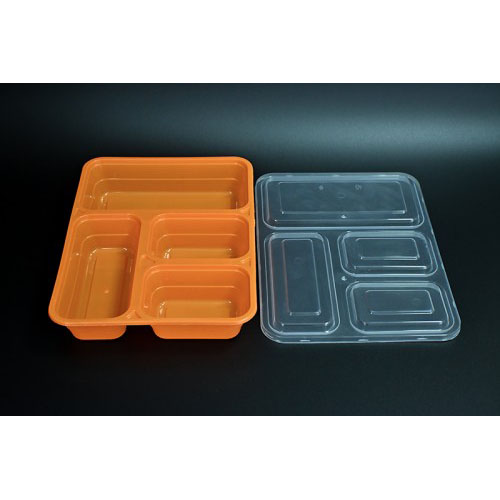
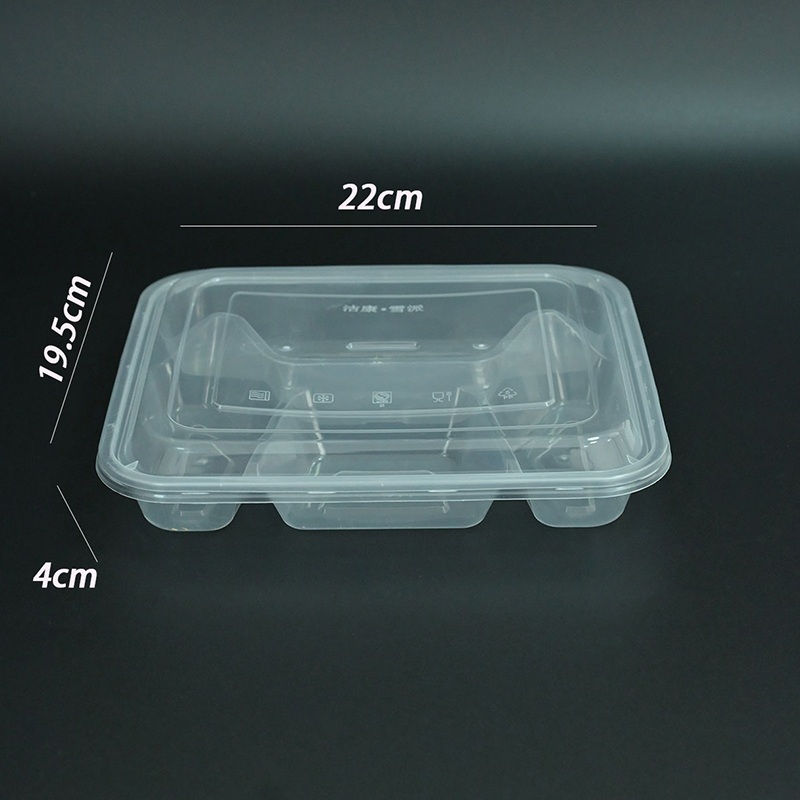
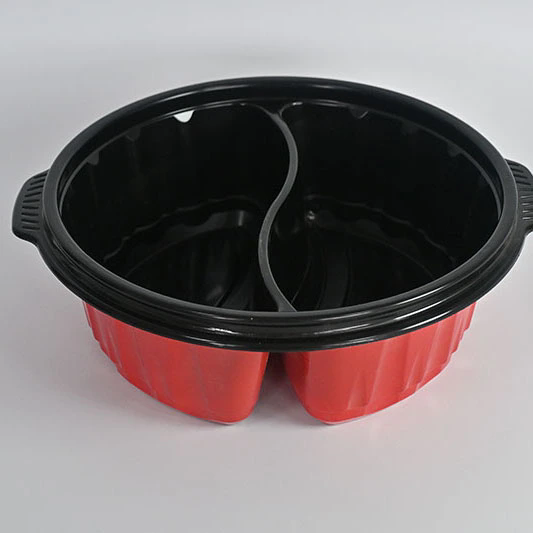
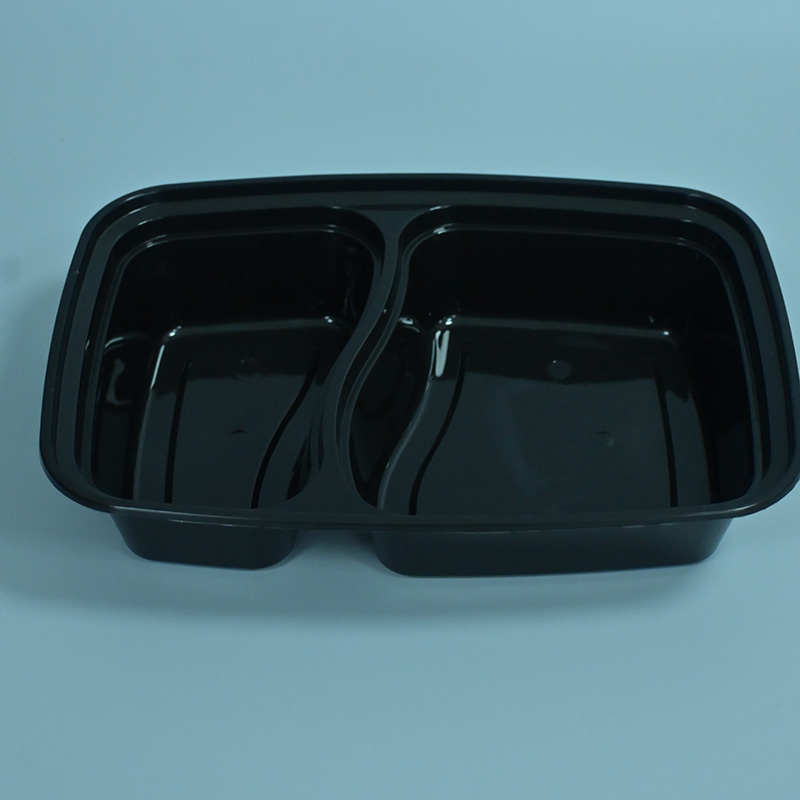
| Compartment configuration | Separate main dishes, side dishes, and sauces |
| Color | Match brand identity or product categories |
| Logo and printing | Strengthen brand recognition |
| Private-label packaging | Create a branded retail or foodservice product line |
| Carton packaging | Improve warehouse and distribution management |
Customization should begin with the actual operational requirement rather than appearance alone. For example, a meal-prep company may prioritize compartment dimensions, while a restaurant chain may focus on consistent branding and standardized sizes across multiple locations.
Before approving a bulk order, purchasing teams can use the following checklist to reduce avoidable problems:
This approach helps buyers move from a simple “container price” comparison toward a more complete evaluation of product performance and supply reliability.
What is an American-style PP square food container mainly used for?
It is commonly designed for takeaway meals, meal preparation, food storage, catering, food delivery, supermarkets, and commercial kitchen operations where practical capacity and efficient stacking are important.
Is polypropylene suitable for food containers?
Polypropylene is widely used in food-contact applications, but the suitability of a particular container depends on its formulation, manufacturing specifications, intended food type, temperature conditions, and applicable regulatory requirements. Buyers should request the appropriate documentation from the supplier.
Can an American-style PP square food container be used in a microwave?
Some PP containers are specifically designed and tested for microwave reheating, while others are not. Buyers should rely on the manufacturer's stated intended use and temperature limitations rather than assuming that every PP container is microwave-safe.
Why are square containers useful for meal preparation?
Their straight sides and consistent footprint make them convenient to arrange, stack, store, and transport. This can be particularly useful when large quantities of prepared meals need to be organized in refrigerators, freezers, or delivery systems.
What should buyers check before ordering food containers in bulk?
Important factors include material specifications, dimensions, capacity, lid performance, stacking stability, intended temperature range, food-contact documentation, customization options, quality control, packaging, minimum order quantity, and production lead time.
Can PP square food containers be customized?
Depending on the supplier and production method, customization may include dimensions, capacity, compartments, colors, branding, printing, packaging, and private-label solutions. Custom requirements should be discussed during the sampling stage.
How can a business choose the right container size?
Start with the actual portion size, food type, sauce volume, stacking requirements, and delivery conditions. Testing the container with representative meals is more reliable than selecting capacity based only on nominal volume.
An American-style PP square food container is more than a simple takeaway box. Its square structure can support efficient storage, its polypropylene construction can provide a practical combination of durability and lightweight handling, and its design can be adapted to restaurants, meal-prep services, catering companies, supermarkets, food delivery operations, and commercial kitchens.
For buyers, the most important step is to evaluate the complete product system: material, dimensions, capacity, lid design, stacking performance, intended temperature conditions, food-contact requirements, quality consistency, and supply capability. A container that works well in a sample but performs inconsistently in large-volume production can create much greater costs than a small difference in the original unit price.
For businesses seeking dependable food container sourcing, Tianjin Jiekang Kitchenware Co., Ltd. can work with buyers to discuss product specifications, bulk requirements, customization needs, and packaging solutions. Whether the requirement involves standard food containers or a customized product concept, clear communication and sample verification are important steps toward a reliable long-term supply relationship.
If you are sourcing an American-style PP square food container for restaurants, catering, meal preparation, food delivery, supermarkets, or other commercial applications, contact us to discuss your required size, capacity, design, packaging, and customization requirements.
Contact us today to discuss your food container project with Tianjin Jiekang Kitchenware Co., Ltd.